The store will not work correctly when cookies are disabled.
This is a demo store. No orders will be fulfilled.
Cookie
This website requires cookies to provide all of its features.
For more information on what data is contained in the cookies,
please see our
Privacy Policy page. To accept cookies from this site, please click the
Accept button below.
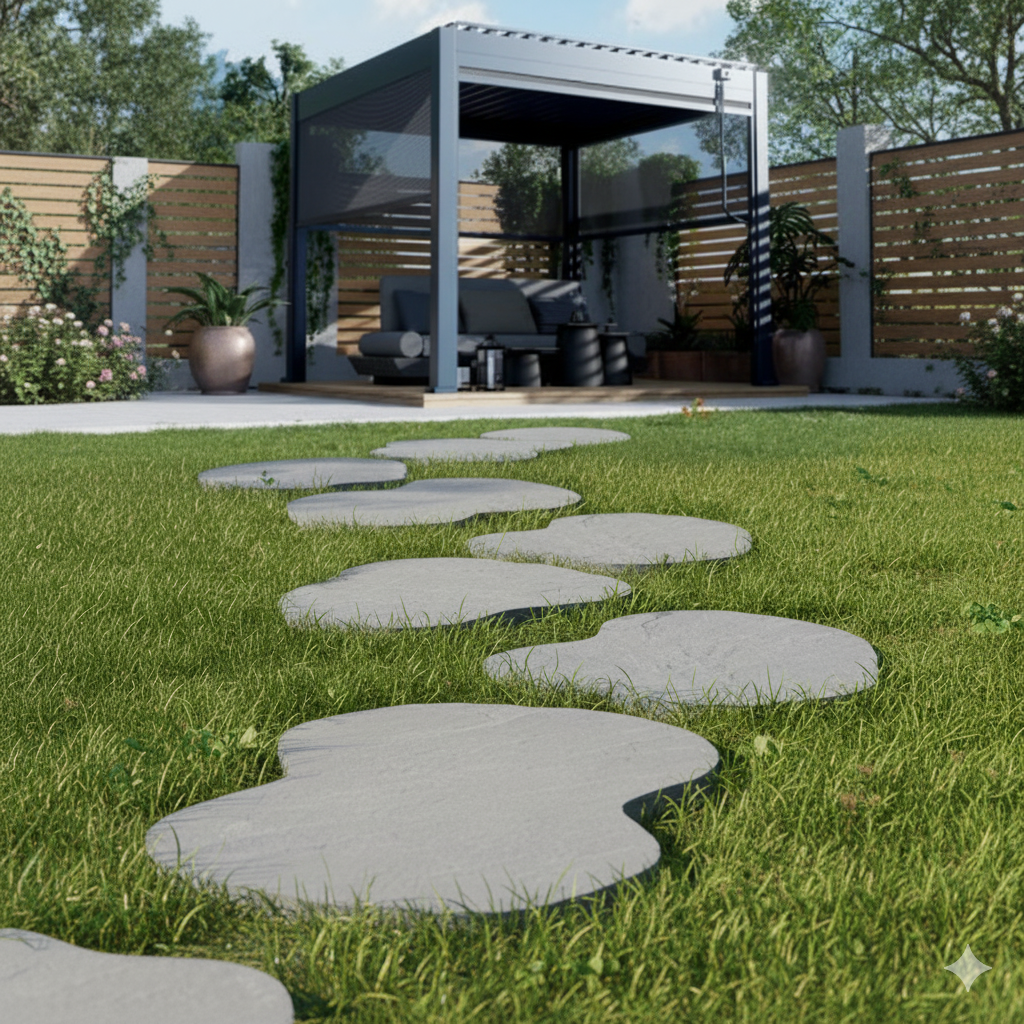
Stepping stones give you an easy way to create informal garden paths without pouring a full patio. You can lead people from the house to a shed, hot tub or seating area while protecting the lawn from wear. With options in natural stone, porcelain and concrete, you can match your stepping stones to nearby paving so the whole garden feels planned and connected.
Create defined garden paths without a full-width walkway
Protect lawns and borders from wear and muddy streaks
Match colours to patios, steps and edging for a joined-up look
Choose from round, irregular or slab-style stepping stones
Suitable for lawn, gravel and decorative aggregates when laid correctly
Stepping Stones lead the way
Garden stepping stones are flat pieces of stone or concrete used to form a path across grass, gravel or planting. They break up longer walks into comfortable strides and keep feet off soft ground, which helps reduce compaction and muddy patches. A simple line of stepping stones can turn an unused strip of lawn into a route that links key areas of your garden. As they are usually spaced apart, stepping stones use far less material than a full paved path. That makes them ideal where you want a lighter touch, or when you are working with a tighter budget. You still get a stable, secure surface underfoot, but the surrounding grass or gravel keeps the look relaxed.
What you put under stepping stones depends on how the path will be used and the ground conditions. For light foot traffic on a firm lawn, you can often dig out the turf and topsoil to the thickness of the stone plus a small allowance for bedding. A thin sharp sand or mortar bed helps you level each stone and holds it steady. On softer or wetter ground, a compacted sub-base layer such as MOT Type 1 gives a more reliable foundation.
Laying stones straight onto bare soil or grass without any excavation is not recommended. The ground moves with frost, rain and regular use, which can make stones unstable and create trip hazards. Taking the time to dig shallow pockets, compact the base and bed the stones properly gives a longer-lasting result.
Versitile and Beautiful Stepping
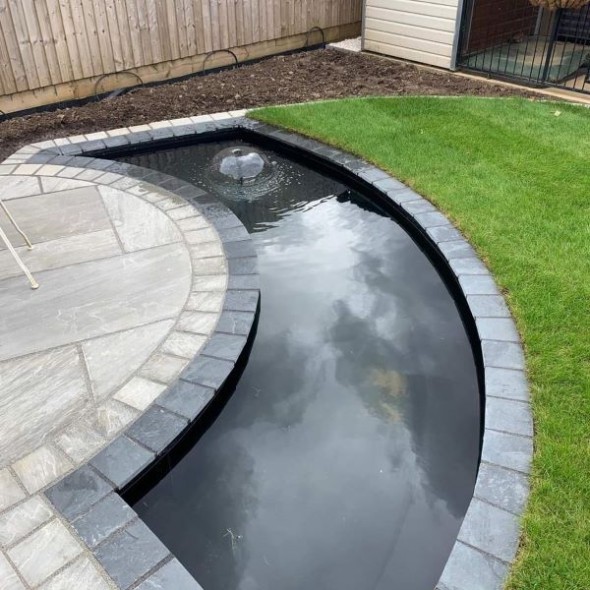
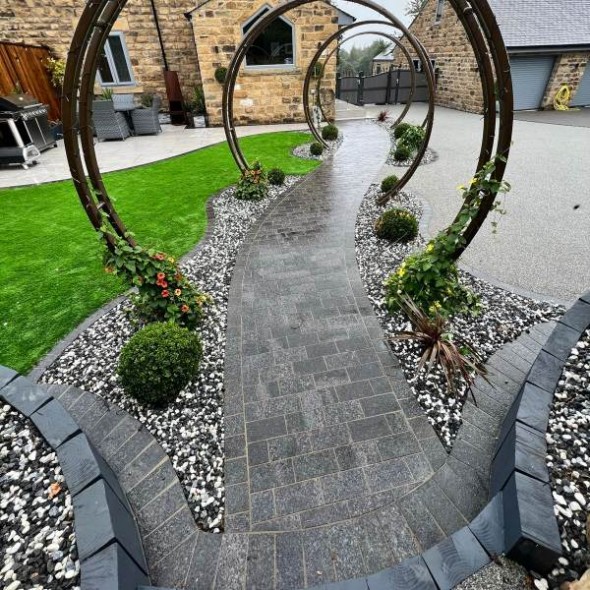
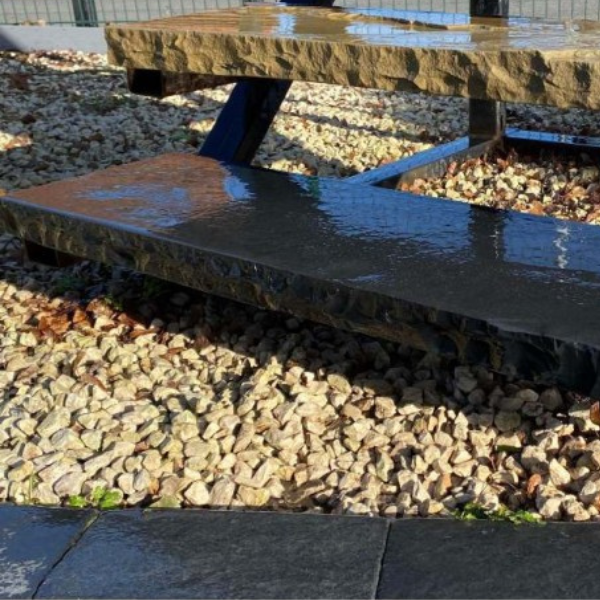
Stepping stones work well in many parts of the garden. Across a lawn, they create a direct line from patio doors to a shed, pergola or garden room. Winding paths through planting beds feel softer and more natural, especially with irregular sandstone or tumbled pieces. Around water features, larger stones can double as viewing or seating spots. Spacing matters. Most people are comfortable with stones set about 400–450 mm apart, measured from the centre of each stone. This keeps the stride natural and reduces the risk of overreaching. On lawns, many people choose to set stones level with the grass so you can still mow across them. In gravel, it often looks better if the stones sit slightly proud so the surface of each piece stays visible.
Stepping Stone Options
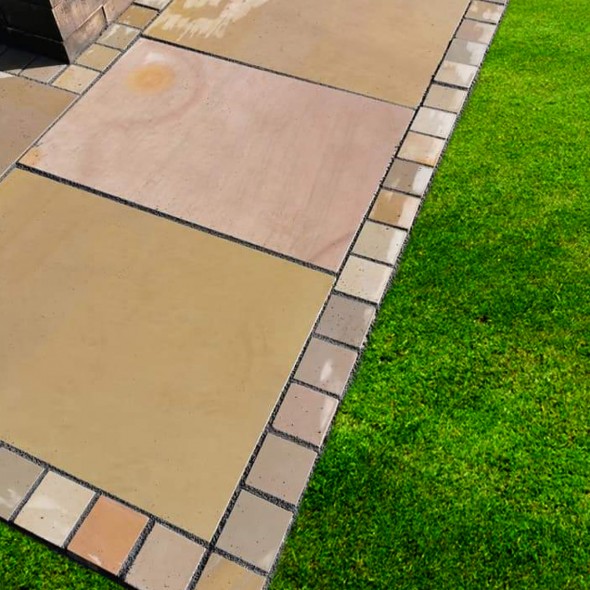
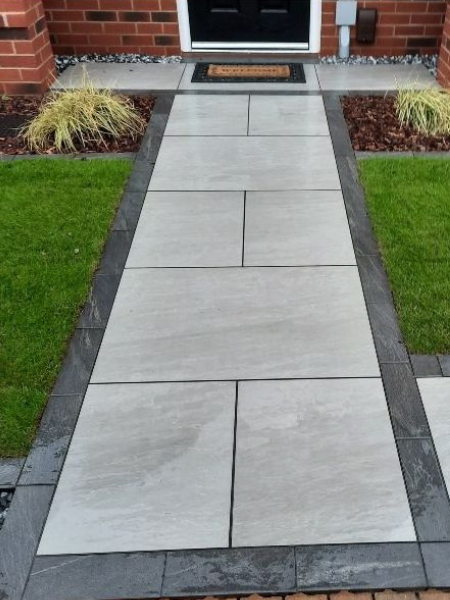
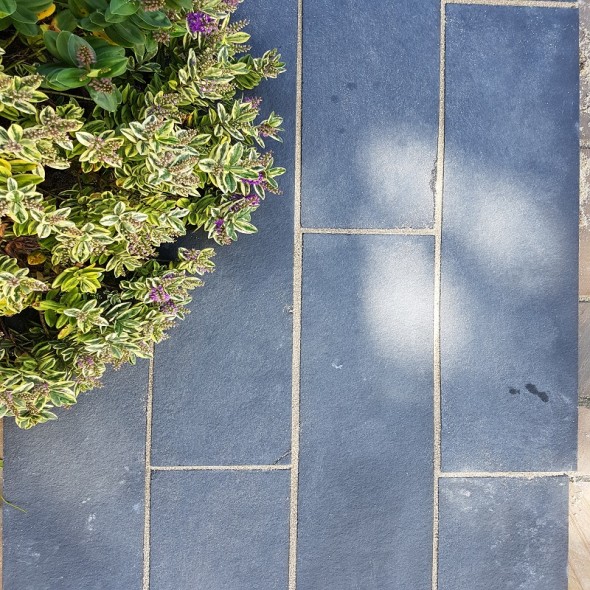
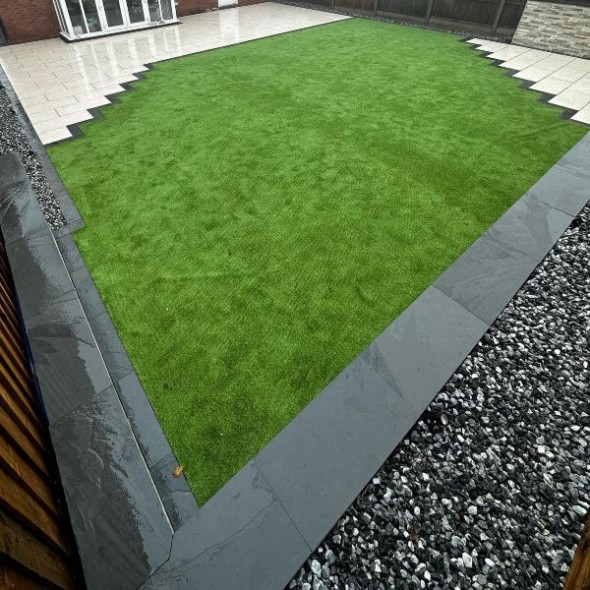
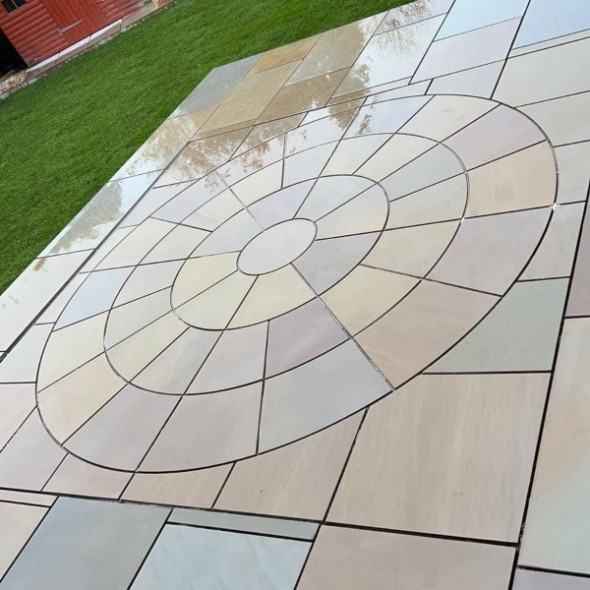
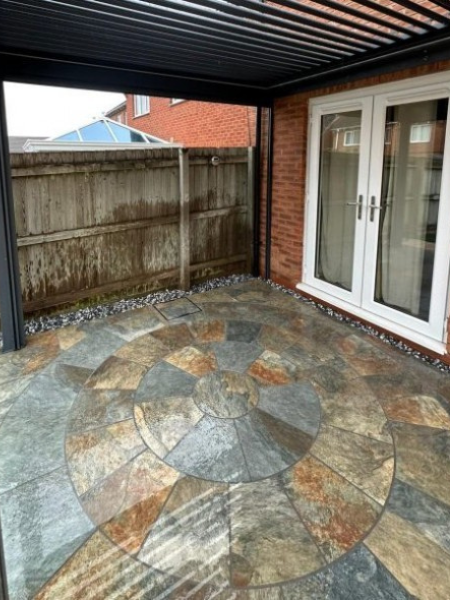
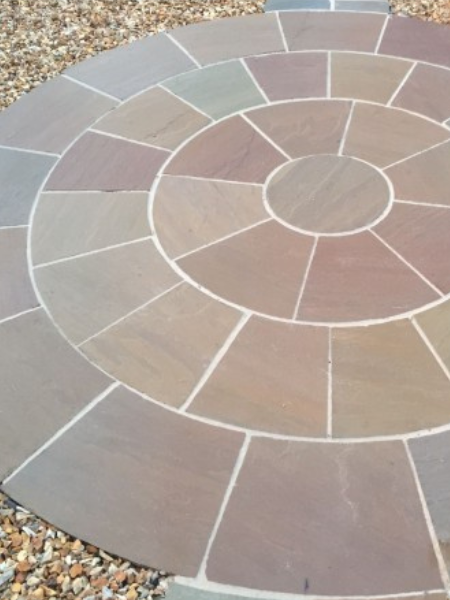
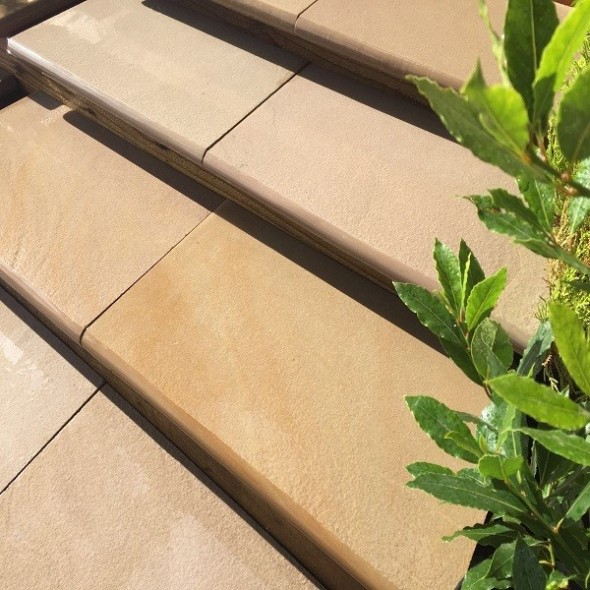
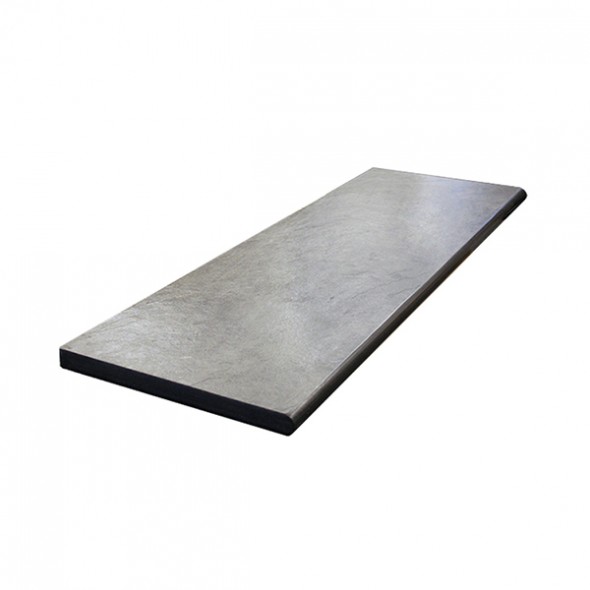
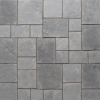
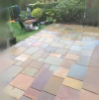
Stepping stones usually fall into a few simple groups. Natural stone stepping stones give that softer, organic look that works well in planting beds and informal lawns. Sandstone stepping stones are popular because the colour tones tie in with many patios and the lightly textured surface feels secure underfoot. For a more contemporary layout, manufactured stepping stone slabs and porcelain stepping tiles keep the shapes very regular. These work well in straight runs leading to a garden room or across a modern lawn, especially in grey and charcoal finishes that line up with current paving ranges.
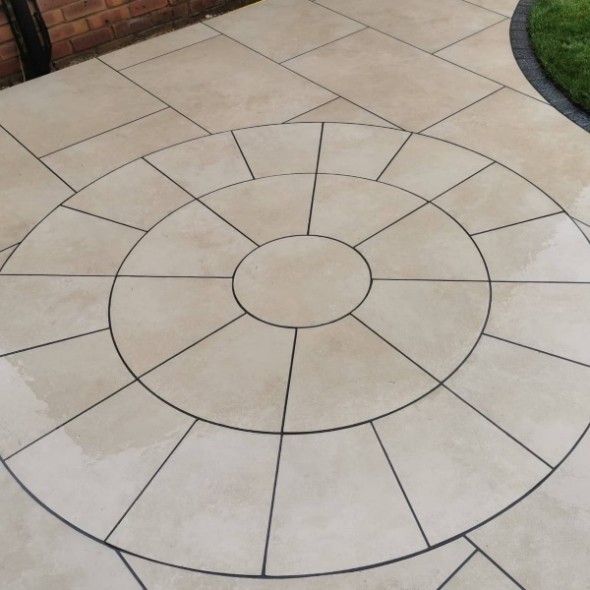
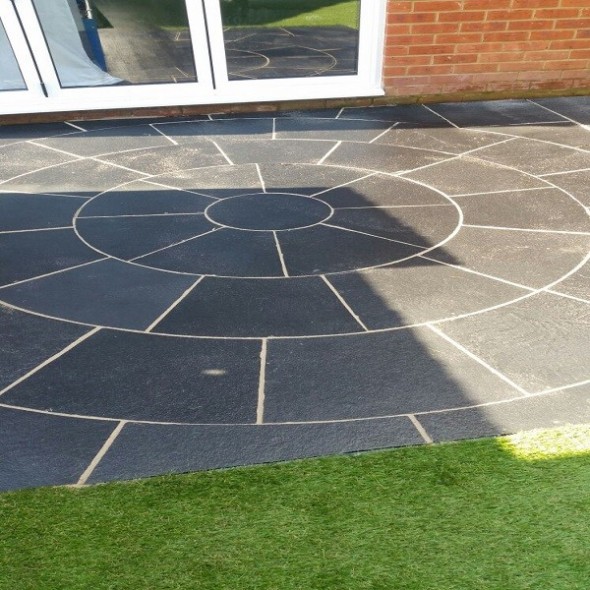
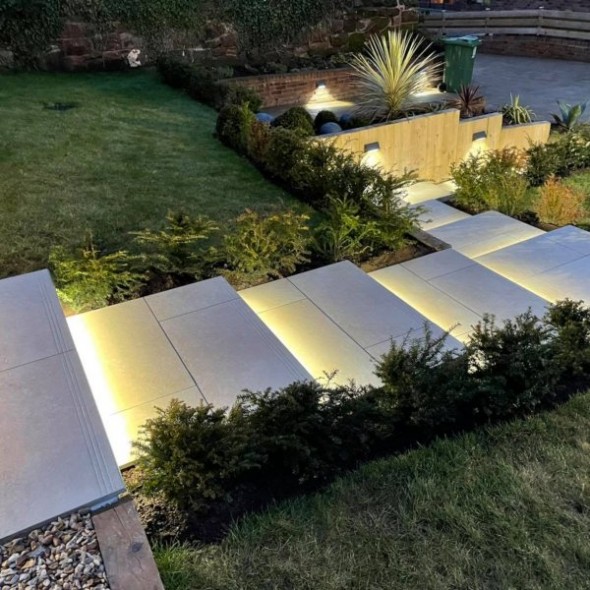
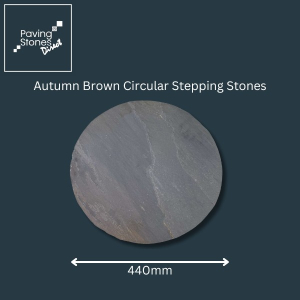
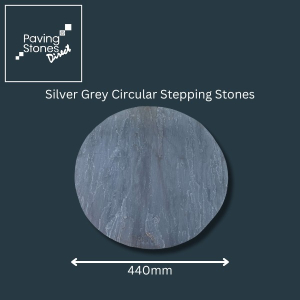
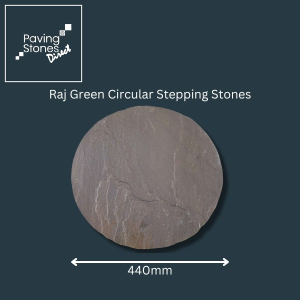
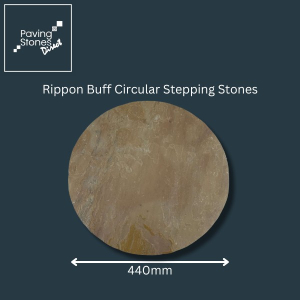
Shape plays a big part in the feel of a path. Circular and round stepping stones suit curved routes and relaxed family gardens. Larger rectangular or square pieces feel more confident underfoot and are useful where you want a bolder feature, such as a path across decorative aggregates or a stepped patio layout.
Why Paving Stones Direct
Paving Stones Direct focuses on exterior landscaping products, so the stepping stones are chosen to sit alongside their main paving, walling and garden features. That makes it easier to match colours and finishes between your paths, patios and feature areas. As direct importers, PSD can keep a close eye on quality while offering options at competitive price points. You can compare different shapes, sizes and textures, from natural sandstone stepping stones to more contemporary manufactured pieces, and line them up with the paving you already have in mind. If you need help planning a stepping stone layout or checking suitability for your project, the team can talk through the options.
For advice on choosing or laying stepping stones, call 0333 321 5091 or email sales@pavingstones.co.uk and the Paving Stones Direct team will be happy to help.
Frequently Asked Questions
What should you put under stepping stones?▾
For a typical garden path, it is best to sit stepping stones on a stable, level base. On firmer lawns, this might be compacted soil with a thin layer of sharp sand or mortar underneath each stone. For busier routes or softer ground, add a sub-base such as compacted MOT Type 1 before the bedding layer. Always check the guidance for the specific product and follow any depth recommendations.
Can you lay stepping stones on grass?▾
You can install stepping stones in a grass lawn, but they should not be placed directly on top of the turf. Simply dropping stones onto grass without any preparation is likely to cause problems. The usual method is to position the stones, mark around each one, then lift the turf and dig out enough soil for the stone and its bedding layer. Once you bed the stone on sand or mortar and tamp it down level with the surrounding grass, you can backfill neatly around the edges. This keeps the path safer and looks better in the long term.
Can I lay stepping stones on dirt?▾
You can lay stepping stones on soil, as long as the ground is firm, level and well compacted. On lighter, well-drained soil, a layer of sharp sand over the compacted surface may be enough for occasional foot traffic. On softer or heavier clay, using a proper sub-base and mortar bed is more reliable, especially where the path sees regular use. If the soil is left loose and uncompacted, stones will move and may become uneven.